About Globe Valves
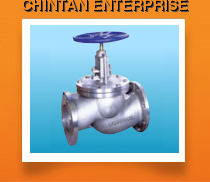
Owing to the state-of-the-art infrastructural unit, we are able to supply and export Globe Valves. These products are known in the market for their effective regulation of water, oil and vapor. Our clients acknowledge these products for their high strength and durability. These products are easy to fit owing to their dimensional accuracy. Globe Valves are delivered to the clients in an allotted time period owing to our extensive distribution system.
Wide Range of Construction MaterialsGlobe valves are available in cast steel, forged steel, stainless steel (SS304, SS316, CF8, CF8M), and cast iron. This broad material selection ensures compatibility with a range of fluids and operational environments, catering to diverse industrial sectors such as chemical processing, oil and gas, power generation, and water treatment.
Strict Compliance and International StandardsManufactured in line with BS 1873, API 602, and ASME B16.34 for design standards, and tested per API 598 and BS 6755, these globe valves ensure dependable performance, reliability, and a traceable quality assurance process to meet global application requirements.
Application Versatility and Sealing OptionsEquipped with PTFE or metal-seated sealing and available trims, these globe valves are suitable for handling fluids, gases, steam, and chemicals. Operations can be manual (handwheel) or actuator-driven, providing flexibility for varied control systems and process demands.
FAQs of Globe Valves:
Q: How are these globe valves typically operated in industrial applications?
A: These globe valves are primarily handwheel-operated for manual control, but models can also be fitted with actuators for automated operation, enabling precise flow regulation and adaptability across different control systems.
Q: What process standards and testing procedures are followed for these valves?
A: Design and manufacture adhere to international standards such as BS 1873, API 602, and ASME B16.34, with rigorous testing in accordance with API 598 and BS 6755. This ensures consistent quality, reliability, and compliance with industry practices.
Q: When should a specific body material, like stainless steel or cast iron, be selected for a globe valve?
A: Selection of body material depends on the application environment and media. Stainless steel is ideal for corrosive or hygienic processes, while cast iron is commonly used for water or general service due to its durability and cost-effectiveness.
Q: Where can these globe valves be installed, and which industries benefit most from their use?
A: These globe valves are suitable for installation in a wide range of industry sectors, including water, oil and gas, chemical processing, and power plants. Their compatibility with ANSI, DIN, and JIS standards allows for global use.
Q: What is the advantage of using a globe valve with linear flow characteristics?
A: A linear flow characteristic allows precise modulation of fluid, gas, or steam flow, making these valves ideal for throttling applications where accurate control is essential to process efficiency and safety.
Q: How does the sealing choice (PTFE or metal) affect valve performance?
A: PTFE offers excellent chemical resistance and tight sealing for non-abrasive fluids, while metal-seated valves endure higher temperatures and abrasive flows, suitable for demanding applications involving steam and aggressive chemicals.






 Send Inquiry


 Send Inquiry
